New clients get a free consultation and patch test.
Electrolysis Clinic

How electrolysis works

Electrolysis has been around for over a century, and it's still the only method that removes hair for good. Here's why it works when laser and waxing don't.

EpidermisDermisFat layerSebaceous glandFollicleRoot and papillaProbe
  1. 1

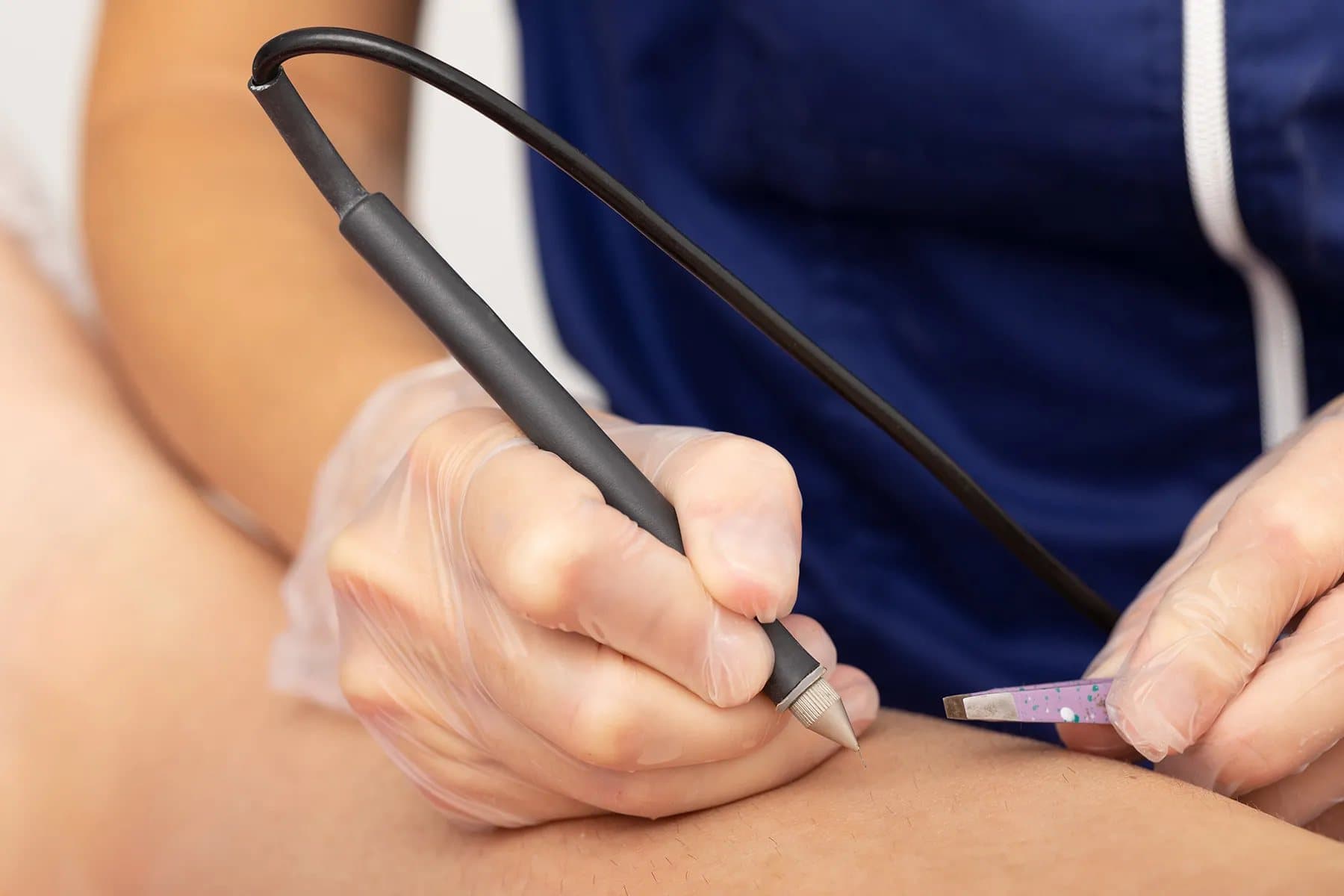
    A fine probe follows the hair into the follicle

    The probe is thinner than the hair itself and slides in alongside it. Nothing pierces the skin.

  2. 2

    A tiny current disables the root

    A fraction of a second of heat, a chemical reaction, or both destroys the cells that regrow hair. You feel a brief warm pinch.

  3. 3

    The hair lifts out and never comes back

    Once a follicle is treated it can't produce hair again. That's what makes electrolysis permanent.

Three methods, chosen for your hair

Every method destroys the follicle so the hair can't grow back. They differ in how, and in how fast. At your consultation we'll pick the one that suits your hair, or combine them.

Thermolysis

Short wave, also called diathermy

A high-frequency alternating current produces heat around the needle tip, which destroys the follicle. A brief insertion and a short burst of current per hair.

Speed
Fastest
Best for
Larger areas and finer hair

Galvanic

Direct current

A direct current creates a chemical reaction in the follicle that produces sodium hydroxide, which destroys the follicle from the inside. Slower, but thorough.

Speed
Slowest
Best for
Coarse, deep or distorted follicles

Blend

Galvanic and thermolysis together

Thermolysis heats the follicle while the galvanic current produces the chemical reaction. Slower than thermolysis alone, faster than galvanic alone.

Speed
Moderate
Best for
Coarse, distorted or stubborn hair

How it compares

Laser heats pigment, so it needs dark hair on light skin and thins rather than removes. Waxing pulls the hair but leaves the root. Electrolysis treats the follicle itself.

Only permanent option

Electrolysis

Laser

Waxing

Permanent
Yes
No
No
Blonde, grey and red hair
Yes
No
Yes
Safe on deep skin tones
Yes
Some
Yes
Treats hormonal hair
Yes
Some
No
Precise single hairs
Yes
No
No
No downtime
Yes
Yes
No

How it works from your first visit

A free consultation and patch test first. Then a full session where we brief you, cover aftercare and agree your plan.

  1. 1

    Visit 1

    Consult and patch test

    Free. We look at the area, talk through what you want, and treat a few hairs so you know exactly how it feels and how your skin reacts.

  2. 2

    Visit 2

    First session and plan

    We brief you on the treatment, go through aftercare, and set out your plan: how many sessions we think you'll need and how often, typically once every two weeks.

  3. 3

    Months 1 to 9

    Regular sessions

    Hair grows in cycles, so we catch each follicle when it's active. Regrowth gets finer and sparser, and sessions get shorter and further apart.

  4. 4

    Months 9 to 18

    Clearance

    Occasional tidy-ups, then you're done. No maintenance, no top-ups, no razor.

Book a free consultation

Meet your electrologist, talk through the area, and have a patch test so you know how it feels. If you want to go ahead, you'll book a full session where we brief you, cover aftercare and set out your treatment plan.

123 Feltham Road, Ashford, TW15 1AB

Electrologist holding a probe and tweezers over a client's skin